It is critical to measure hydrocarbon and water dew points to satisfy natural gas transportation contracts and to prevent hydrate forming conditions. This can be performed with the use of chilled mirror moisture analyzers using primary measurement technology.
For a given pressure, as the temperature of a gas sample decreases to a point below a dew point temperature (either water or hydrocarbon), condensation will occur. This is the key principle behind the chilled mirror device. In chilled mirror technology, sample gas passes over a temperature-controlled mirror in the sample chamber. As the mirror is cooled, ‘dew’ collects on the mirror, and the temperature when dew forms is recorded as the dew point temperature.
There are two categories of chilled mirror devices that are typically used for measuring hydrocarbon and water dew point – manually operated or automated. The difference between them is how the mirror is cooled. For the manually operated device, the mirror temperature is controlled by a user adjusting the amount/rate of refrigerant such as propane or carbon dioxide. Automated chilled mirror devices use a Peltier thermoelectric cooling method. The advantage of a manually operated device is its low cost. However, these devices require experienced technicians to accurately control the cooling while simultaneously viewing the formation of dew on the mirror to make a proper measurement. Conversely, automated devices have a higher cost but provide highly accurate results using a light-based method to detect dew formation without the need of an experienced technician.
While there are several instruments to discuss, this article pertains to two primary measurement products in the AMETEK Process Instruments product portfolio – the Model 13 Standard Bureau of Mines Dew Point Tester and the Chanscope II. Both instruments offer a rugged, portable solution to finding the dew point temperature (water or hydrocarbon) of any natural gas. This is often important when verifying electronic analyzers with a similar function. The method of these two devices is simple and effective; they both use a chilled mirror. The difference between these two devices is the method to record the dew point temperature. The Model 13 uses an external thermometer that records the mirror temperature. The Chanscope II incorporates a digital temperature reading in the viewing window. Both devices are considered manual chilled mirror instruments.
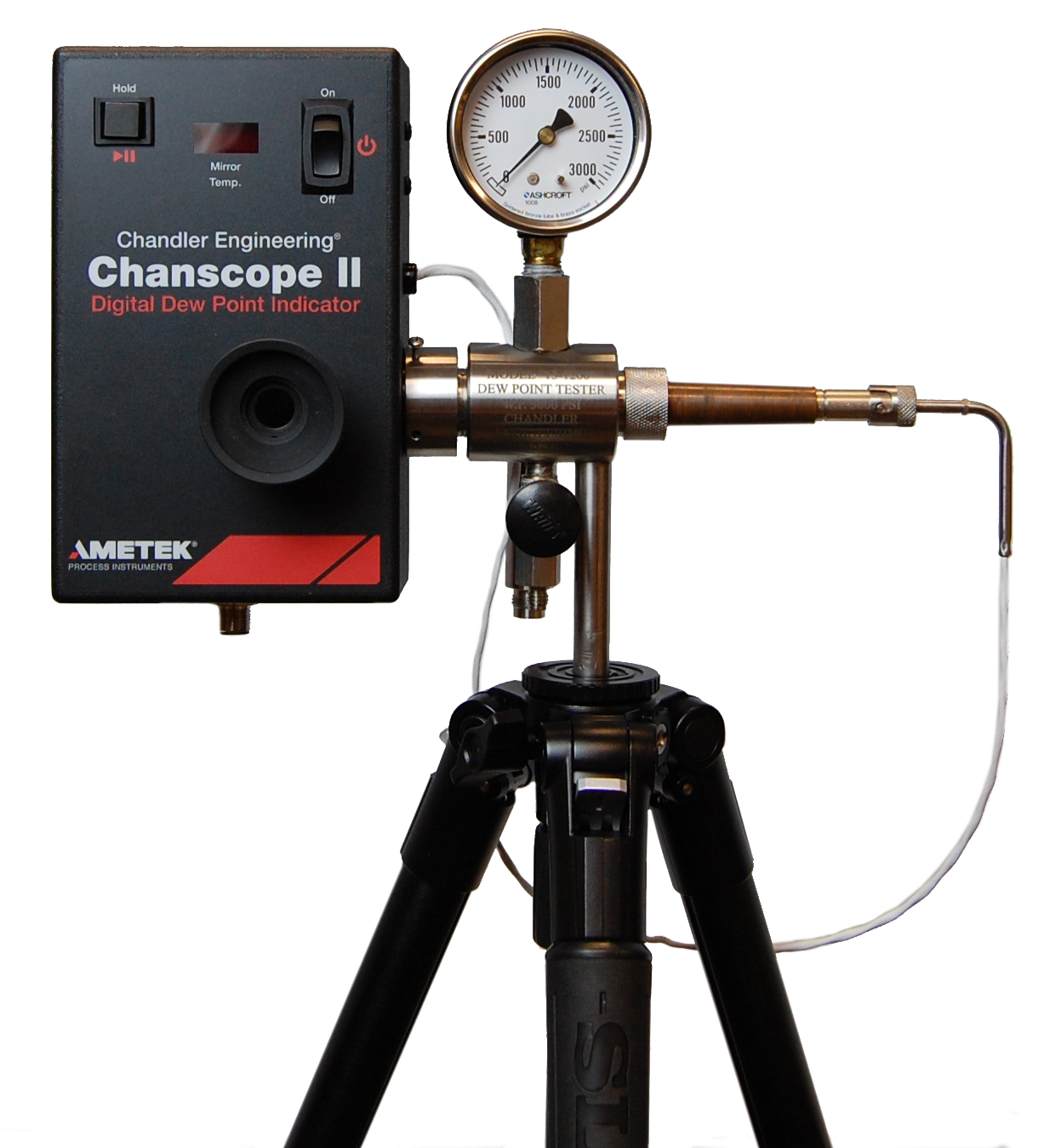
The Chanscope II is user-friendly dew point tester that is easy to maintain and operate, it displays the temperature above the illuminated mirror, making it simpler for the operator to determine results. |
|
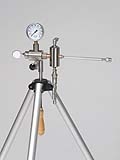
The Model 13 Standard Bureau of Mines dew point tester is entirely manual, with the operator acting as the ‘detector,’ controlling the rate of mirror cooling, and reading the indicated temperature on the thermometer when dew forms on the mirror. |
The Chanscope II and Model 13 also come with several options for different applications such as sour gas and offshore applications. For the sour gas option, the components feature stainless steel parts and Kalrez® o-rings to help mitigate the corrosion from sulfur. For the offshore option, the electronics on the Chanscope II are protected by Humiseal® along with other components resistant to the corrosive environment.
Learn more:
AMETEK’s chilled mirror devices
Standard Bureau of Mines Dew Point Tester
Chanscope II dew point tester